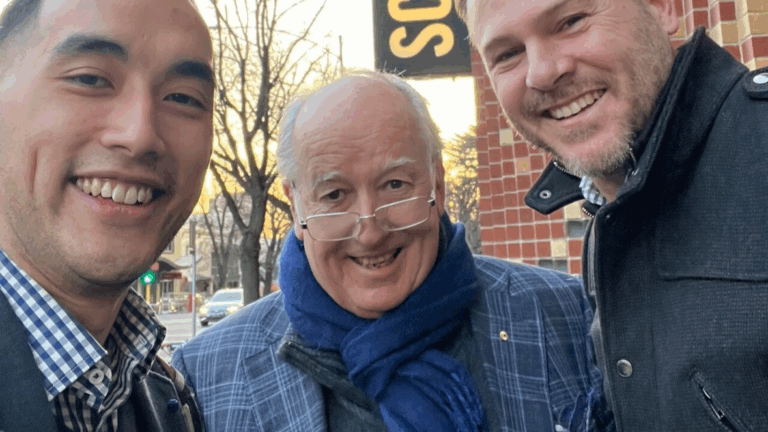
I’m Turning 73 This Year. It took me 47 years to learn these critical business lessons.
Although it's been more than decade since his passing, his influence and teaching have rubbed off on me.
Read more

I’ve always believed in the power of connection.
For my whole life, I’ve been surrounded by amazing peers, colleagues, family, friends, and mentors. Whether I was in law, politics, philanthropy or business, people shaped my journey for the better.
If there’s one thing I’ve learned from them, it’s that success is rarely a solo journey.
Behind every great entrepreneur is a network of people who believed in them before the world took notice. In 2024, I had the privilege to watch two incredible entrepreneurs, Patty and Claudia, take the stage as finalists in Timor-Leste’s entrepreneurship awards late last year.
I saw proof of what happens when the right support meets the right mindset.
I’ve always believed there are two types of people in business:
The best mentors have often been values based entrepreneurs. They see business as a way to solve problems, uplift communities, and create something bigger than themselves. Yes, they need to make a profit. But they are also driven to make sustainable change.
That’s exactly what Patty and Claudia do.
Through the Good Business Foundation, we’ve been supporting them over the past year. Our flagship program, co-funded by the Department of Foreign Affairs and Trade (DFAT), has supported Patty and Claudia and other women-led businesses in business coaching, mentoring and investor readiness.
When we met them we soon realised neither of them were motivated purely by money.
They were motivated by meaning, purpose and community.
Both could have applied their entrepreneurial mindset and skillset to more profitable ventures that lacked impact. But instead, they chose to start a business that served a bigger purpose.
Recently in Timor-Leste, Claudia (Founder of Vera Juice) mentioned that one of her key KPIs for her business was how many children were in school. She explained that when she first went to the district she was planning to buy fruit from to make her juice she saw two things.
First she saw rotting fruit on the ground.
Second she saw children not in school.
So she made a deal with the farmers. If she bought their fruit they would ensure their children went to school. The deal was struck and Vera Juice was born!
That’s the kind of entrepreneur I want to back.
The ones who are in it for the long haul. The ones who don’t quit when things get hard. Because it’s not just business, it’s community.
Entrepreneurs like Claudia change industries.
Mercenaries chase trends.
Transactions-based mercenaries are in business to turn a quick buck. They aren’t concerned with service. If it increases their bottomline in the short term, they will do it. Even it costs them their integrity and damages the environment.
I know who I’d rather invest in and partner with.
People told them it would never work.
They said customers wouldn’t pay for impactful products when cheaper alternatives existed. They said converting waste into usable products would be too expensive, too complicated, too risky.
But they were all wrong.
Both of these women saw what others missed:
Sustainability and creating impact isn’t a cost. It’s an opportunity.
It’s a competitive advantage that sets businesses apart, wins customer loyalty, and future-proofs companies in a world that’s demanding better.
As my father used to say ‘the best entrepreneurs never waste a good crisis’.
They question it. They find ways to turn obstacles into advantages. I see too many businesses treat sustainability like a compliance issue. Ticking a box. Something to do because they have to. But the most successful ones see it as a core business strategy.
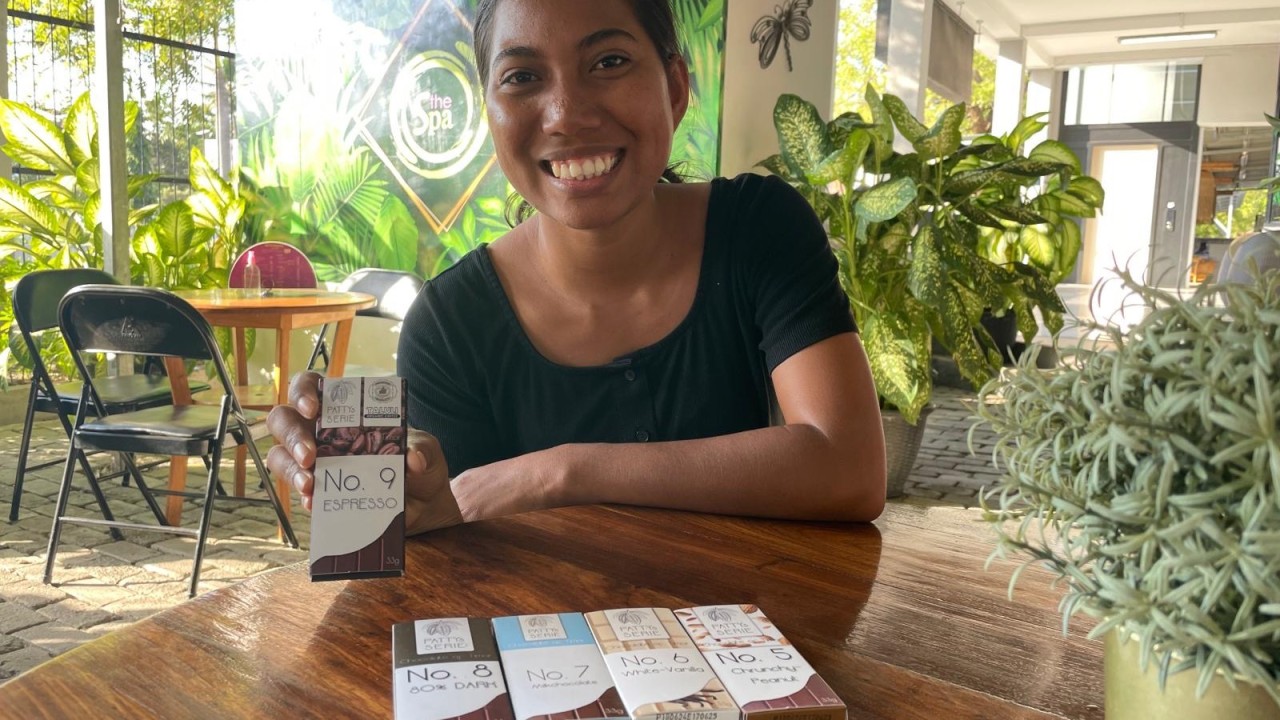
Patty’s story is also one of inspiration. Back in 2019 she was working in a phone repair shop owned by Daneil an ex Swiss volunteer. Then COVID struck and she was without a job. So she built a chocolate business into some of the best chocolate I have ever eaten. On top of that she employs Daniel as an advisor. Now she’s the boss!
These women didn’t just build sustainable and impactful practices and then a businesses.
They simply built better businesses.
Neither of them had access to venture capital.
Neither of them had deep-pocketed investors or high-profile connections. But what they did have was grit, adaptability, and the mindset to work with what they had and make something pretty special.
Claudia started by selling small batches of her juice at local markets, reinvesting every dollar back into her business. Patty built a network of early adopters who believed in her vision before she even had a fully scaled operation.
They didn’t wait for perfect conditions. They moved forward with what they had.
Too many people think business success is about resources. But resources come and go. What really matters is resourcefulness. The ability to find solutions, adapt to challenges, and keep going when the odds are against you.
Watching them grow their business has been inspiring.
They overcame barriers I never had as an entrepreneur in Australia. Gender stereotypes, a weak business ecosystem, and socioeconomic disadvantage. I couldn’t help but think of the impact they could have if they had the right support and networks.
Our work doesn’t just support individuals. Ultimately we want to see the whole country and economy change. As they say ‘a rising tide lifts all boats’.
We are starting by building a network of entrepreneurs like Claudia and Patty. People that stand together and support each other. Creating businesses that show doing good and making money do go together.
It’s easy to be sceptical, it’s easy to be worried. Particularly in times like these!
But these entrepreneurs are building the future.
And that’s a generation I want to invest in.
Till next time,
Peter
P.S – If you want to receive exclusive updates on business trends, philanthropy and the future of work, sign up to my email list: HERE.
Although it's been more than decade since his passing, his influence and teaching have rubbed off on me.
Read more
Although it's been more than decade since his passing, his influence and teaching have rubbed off on me.
Read more
Although it's been more than decade since his passing, his influence and teaching have rubbed off on me.
Read more