Why I Believe Leadership Is More Than a Title, Role and Corner Office.
Although it's been more than decade since his passing, his influence and teaching have rubbed off on me.
Read more

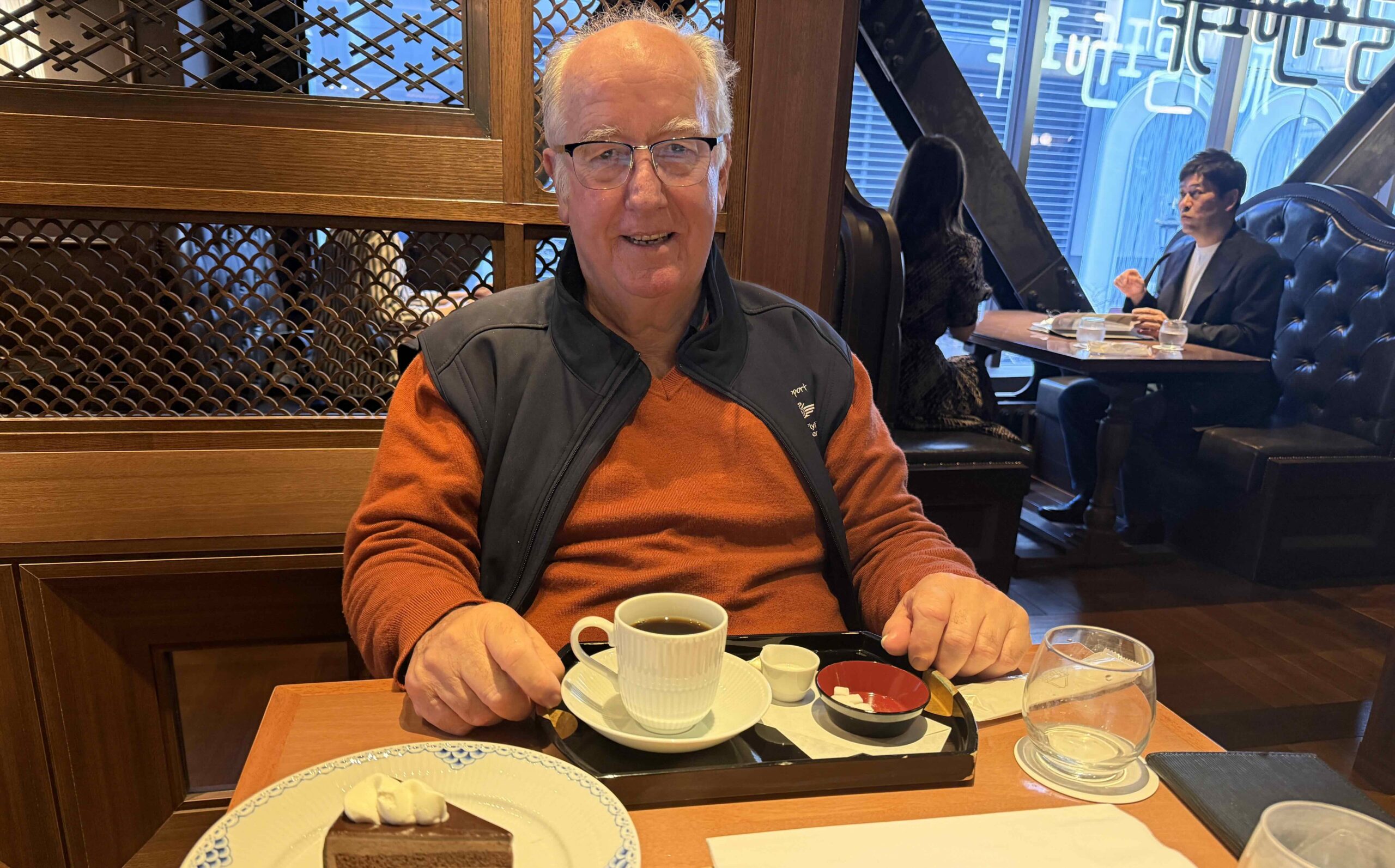
As I write this I’m currently in New Zealand celebrating my 74th birthday.
While I sip my morning coffee, I’m looking out at the picture-esque landscape of Lake Wanaka. I’m surrounded by my loving family. The phone is buzzing as I receive birthday messages from friends near and far. I am one lucky man!
For those who know me you know I’ve always enjoyed a good birthday celebration.
But this year, I’ve been feeling more reflective than in previous birthdays. The escalating global conflict, the subsequent fuel crisis, and the recent wrap-up of the first iteration of the Female Founders Program in Timor-Leste. It’s given me a lot to reflect upon.
Here’s what 74 years on this earth has taught me about life, business and entrepreneurship.
I’ve been supporting Timor-Leste’s economic development for over 50 years.
That’s half a century of relationships, setbacks, hope, frustration, progress, and patience. But over those 50+ years, I’ve witnessed the country achieve independence, grow its economy, and now join the Association of Southeast Asian Nations (ASEAN).
But when I look back, I don’t think the impact came from any single moment.
I can’t think of one decision, one breakthrough, or one speech or meeting that felt like a key moment that changed everything. All of them mattered. Sometimes progress felt easy. But there was never a silver bullet.
This taught me that meaningful results come from showing up for a long time.
Especially when it felt easier to call it a day and move on to something else. There were years when it felt like we were not making significant progress. Years where the road ahead looked uncertain.
But I kept showing up, and so did the people and leaders of Timor-Leste.
People will overestimate how much progress can be made in a year. But underestimate how much progress they can make in a decade. Or multiple decades. When you expand your time horizon, what seems impossible to achieve can become a reality.
I’ve seen it in Timor-Leste, and many other projects I supported through the Good Business Foundation.
In the short-term, intensity wins.
In the long-term, consistency wins.
This approach can be applied to business, relationships, and sports.
Strong marriages, friendships, and partnerships are rarely built on grand gestures alone. They’re built in the ordinary moments. The morning coffee routine. The conversations. The small acts of care. The decision to make time for each other, even when life gets busy.
But most entrepreneurs expect results in 3-5 years, or they get disheartened.
Extraordinary outcomes are achieved through doing ordinary things for an unreasonable amount of time. Extreme results come from extreme patience. You’re allowed to walk slowly, just never backward.
Great businesses are built over time, not overnight.
When I was younger, I thought business was about ideas.
I would chase after good ideas. Big ideas. Clever ideas. But time after time, the ideas that worked were because of the people executing them, not the ideas themselves.
Good ideas matter, of course. But they’re not the deciding factor.
People are what make or break an idea.
As a philanthropist and investor, I’ve backed projects that looked perfect on paper. These ideas had a strong strategy. A clear market segment. Good timing. But they went nowhere after a few years.
I’ve also seen the opposite happen.
A team approaches me with a messy idea. Incomplete plans. Plenty of uncertainty. But the people behind them had something about them. I could see they had the right judgment, resilience, and persistence.
In the end, they made an incomplete idea work.
That’s where I learned one of the most important lessons of my career:
Back the person, not just the project.
A good operator can take an average idea and make it exceptional.
A poor operator can take something exceptional and run it into the ground.
It sounds obvious when I say it out loud.
But this is not how most people make decisions.
At 74, I find myself asking a very simple question when investing:
Do I trust the people to execute on this idea?
Not just their capability and credentials. But their intent. Their values. Their character. How do they behave when things don’t go to plan? How will they respond to setbacks or obstacles?
In business, bad things will inevitably happen.
And when they do, it’s people who determine how to respond, not numbers on a spreadsheet.
Success in entrepreneurship is about 1% ideas and 99% people.
My life has been defined by great relationships.
Relationships are the best asset class you can invest in.
When you build a meaningful network, it’s:
My time as President of the Victorian Chamber of Commerce and Industry (VCCI) taught me that business is never just about transactions. The VCCI members who thrived were those who built the highest-quality relationships.
The strongest businesses are built inside strong communities.
Now, through my role as President of the Confederation of Asia-Pacific Chambers of Commerce and Industry (CACCI), I see the same thing playing out.
In Asia, business growth happens at the speed of trust.
At 74, if I could give one piece of advice to younger entrepreneurs, it would be this:
Treat relationships like your most important long-term investment.
Be generous before it’s convenient. Stay in touch even when there’s nothing to gain. Help people without keeping score.
Money gives you options. But relationships give your life meaning beyond profit.
The only catch is that relationships are fragile. It might take years to build a relationship, but only minutes to destroy it. Once the relationship is gone, it might never come back.
Relationships in business pay the best dividends.
Reflecting on my life so far, I don’t think business has become easier.
If anything, growing and scaling a business has become more complex. But the fundamentals haven’t changed. These are lessons I keep learning year after year.
Looking out across Lake Wanaka this morning, the sound of my grandchildren playing outside, I’m reminded that while markets change, technologies evolve, and crises come and go, the principles that endure are remarkably simple: show up, back people, and invest in relationships.
And that’s a future I can believe in.
Till next time,
Peter McMullin AM.
Although it's been more than decade since his passing, his influence and teaching have rubbed off on me.
Read more
Although it's been more than decade since his passing, his influence and teaching have rubbed off on me.
Read more
Although it's been more than decade since his passing, his influence and teaching have rubbed off on me.
Read more